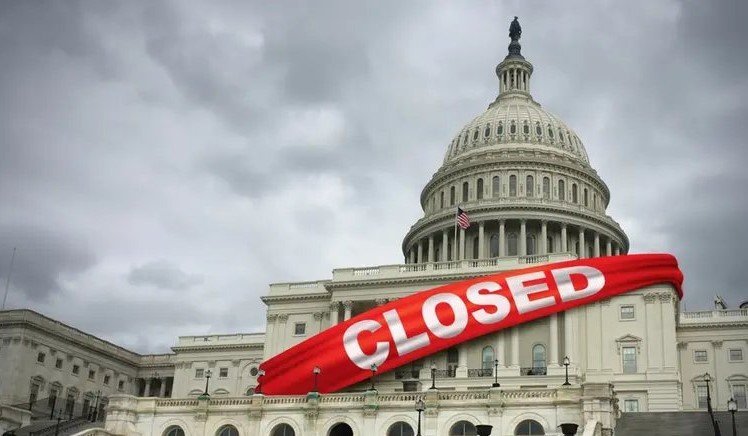
The ongoing US government shutdown, as Republicans and Democrats in Congress continue to battle over funding, could potentially hurt economic growth in the fourth quarter, but the reopening of the economy could restore much of the lost output.
Economists estimate that the shutdown is sapping 0.1% to 0.2% of annual GDP growth, adjusted for inflation, each week.
Consumer spending and federal employee productivity will be the biggest casualties of the shutdown, which has been ongoing for more than three weeks.
With approximately 700,000 federal government employees furloughed, while a similar number are working without pay, households may be forced to defer some spending.
The White House has indicated that federal employees will receive retroactive pay when the government reopens, and the Trump administration has laid off some previously furloughed employees.
Government contract workers have been temporarily laid off and typically do not receive pay for periods they have not worked.
"There will be an impact on the economy," said Gregory Daco, chief economist at EY Parthenon. "It won't push the economy into recession, but the longer it lasts, the more permanent the losses could be for federal government employees who may have had to cut back on spending because they haven't been paid or because they're simply being more prudent in managing their finances despite expecting to receive their pay retroactively."
Congress sometimes approves annual funding for certain federal departments, as happened before the shutdown that lasted from late 2018 to early 2019, when large parts of the government were funded.
This time, however, no department was funded, making the shutdown's impact broader and not limited to federal employees.
Although members of the military received their paychecks last week, media reports indicate that some have not received their full pay.
Several states, including New York and Texas, have warned that food stamp payments, which low-income families rely on to supplement their grocery needs, will be unavailable if the shutdown continues through November.
Pennsylvania announced the suspension of food stamp payments as of October 16.
Government shutdown threatens temporary damage to the US economy