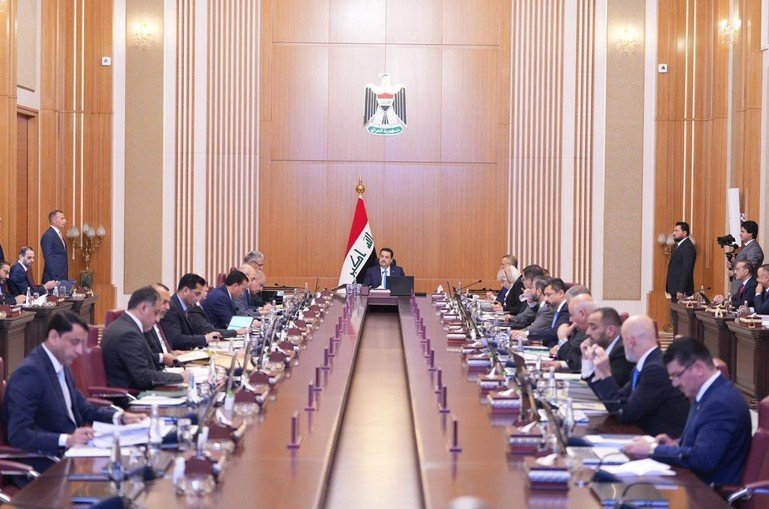
During its first regular session held on January 7, 2026, the Iraqi Council of Ministers issued new austerity measures as part of a package of economic and administrative procedures. These measures were based on an emergency proposal submitted by the Prime Minister and a report from the Ministerial Council for the Economy, which approved the Council's recommendation aimed at reducing government spending and maximizing revenue.
According to documents, the decisions included "authorizing ministries, non-ministerial entities, and governorates to sell all their vehicles that are 15 years old or older, in addition to selling all production and non-production vehicles, equipment, generators, and machinery that are out of service or surplus, regardless of their year of manufacture, in accordance with the Law on the Sale and Lease of State Assets. The decisions prohibit replacing sold vehicles with alternative vehicles or purchasing new ones. This includes vehicles belonging to the Ministry of Foreign Affairs operating outside Iraq. The relevant authorities are required to submit a detailed list of the vehicles to be sold within 30 working days."
The measures included “reducing fuel quotas allocated to all ministries, non-ministerial entities, and governorates by 50%, with the exception of generator fuel, for a period of six months only. Government entities are required to switch to solar energy during this period, and the Ministry of Oil is tasked with exporting the fuel quantities saved as a result of the reduction.”
The Cabinet also decided to “recognize the academic certificate upon which an employee was initially appointed as their final certificate, and not to recognize certificates obtained during service for any employment purposes in government departments, effective January 1, 2026. Exceptions will be made for teaching staff in the Ministry of Higher Education, within narrow limits, and for medical and nursing specialties in the Ministry of Health, in addition to those on government scholarships to study abroad before the issuance of this decision.”
The decisions also included “suspending transfers to the Ministries of Oil, Finance, Defense, Education, Higher Education and Scientific Research, or any entity to which a transfer would result in an increase in financial allocations. Furthermore, government scholarships for study abroad will be suspended, as will the granting of study leaves in all government departments for a period of five years.”
The Cabinet also directed the General Authority for Free Zones to “activate re-export in accordance with the applicable Customs Law, stressing the importance of the committee formed under Diwani Order No. 68 of 2025 to complete the tasks assigned to it, within the framework of governmental efforts to control public spending and address financial pressures.”
The Iraqi government issues new decisions: selling unproductive state vehicles, suspending the recognition of degrees and scholarships, and prohibiting transfers between ministries.